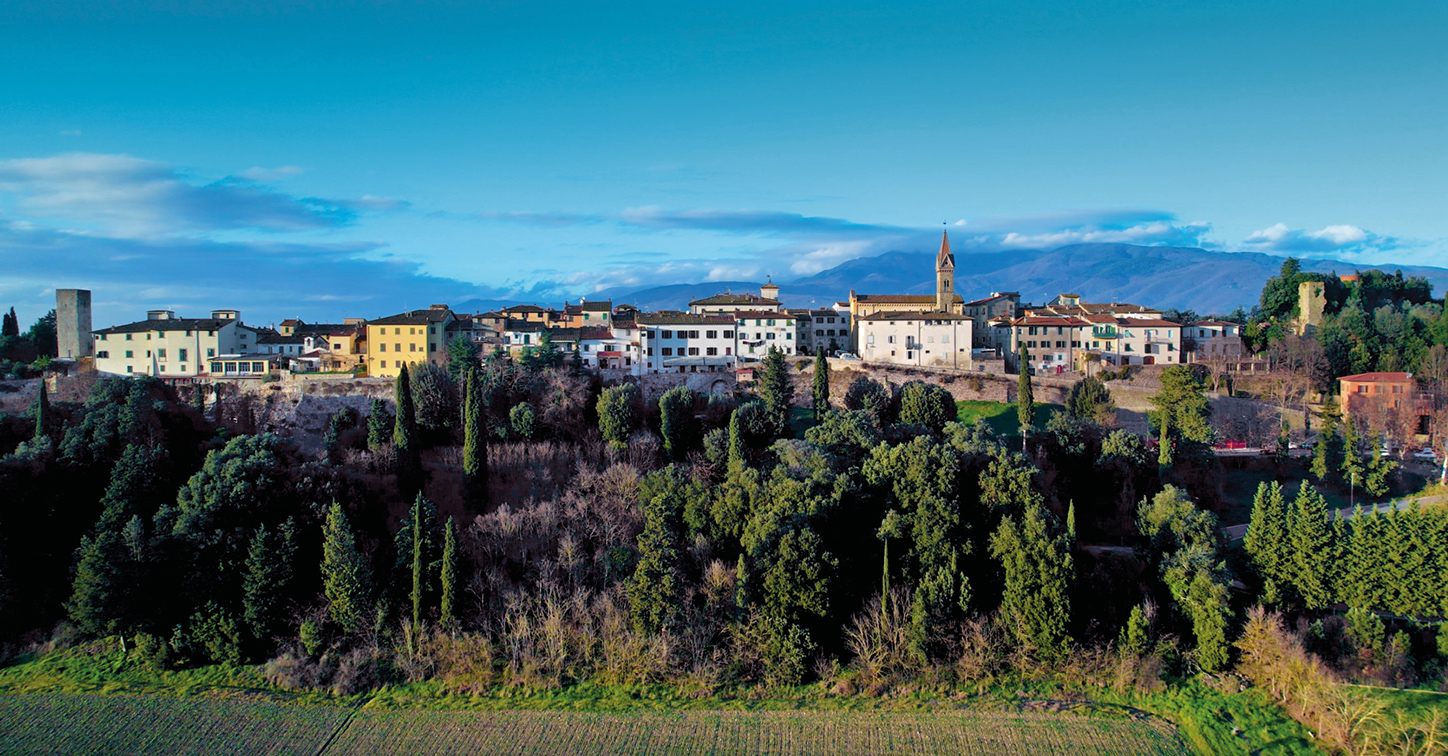
Castello di Laterina, Valdarno, Tuscany
A walk through the walls of a medieval village that's still lived in, not a museum, not a ruin: a thousand years of history, crossed on foot.
Laterina is visible from a distance before you reach it: a skyline of towers and rooftops on a hill in the Valdarno, surrounded by cultivated fields. It isn't a ruin preserved for visitors: it's a fortified medieval village, still inhabited and lived in.
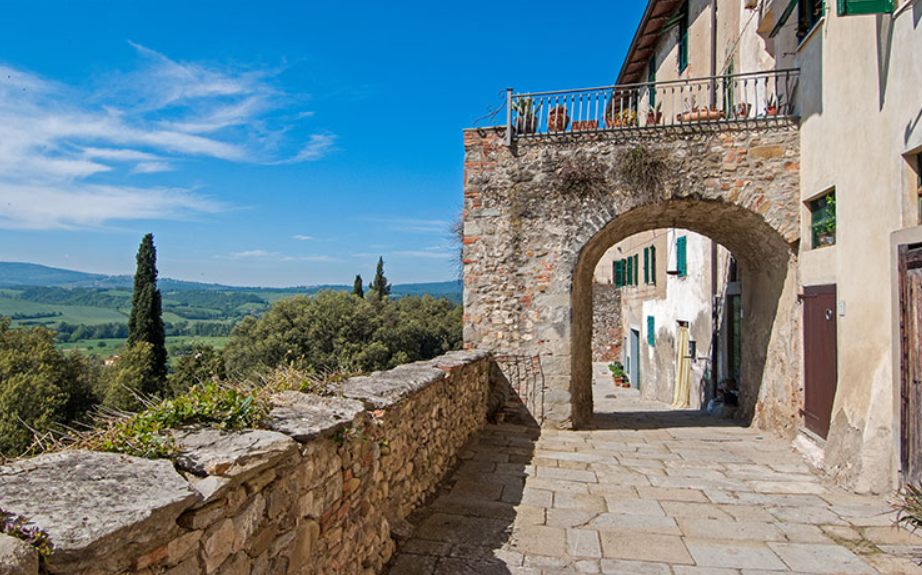
The walls that still encircle the village today haven't always had their current height. Local sources consulted say that in medieval times they stood taller than what's visible now: they were lowered around the seventeenth century, and the stone recovered from the work was reused for construction inside the castle itself: houses, dividing walls, extensions. This isn't a primary-archive fact, but a tradition passed down locally, and it's consistent with what you notice walking the perimeter: stretches of lower masonry next to buildings that seem to have inherited stones older than themselves. The result is a walkway that today makes for a pleasant stroll, with the Valdarno countryside opening up beyond the stone edge.
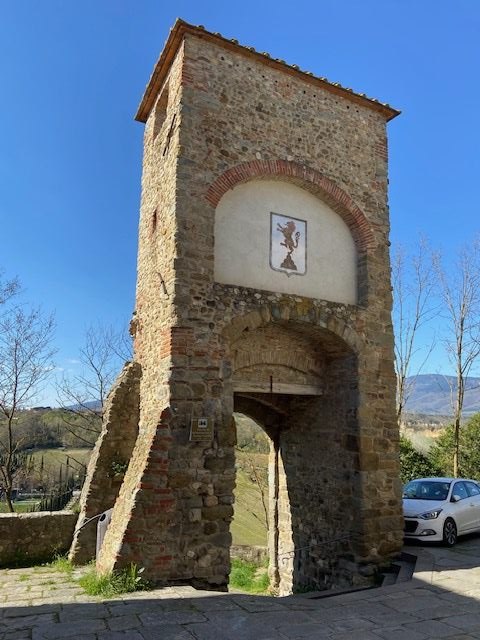
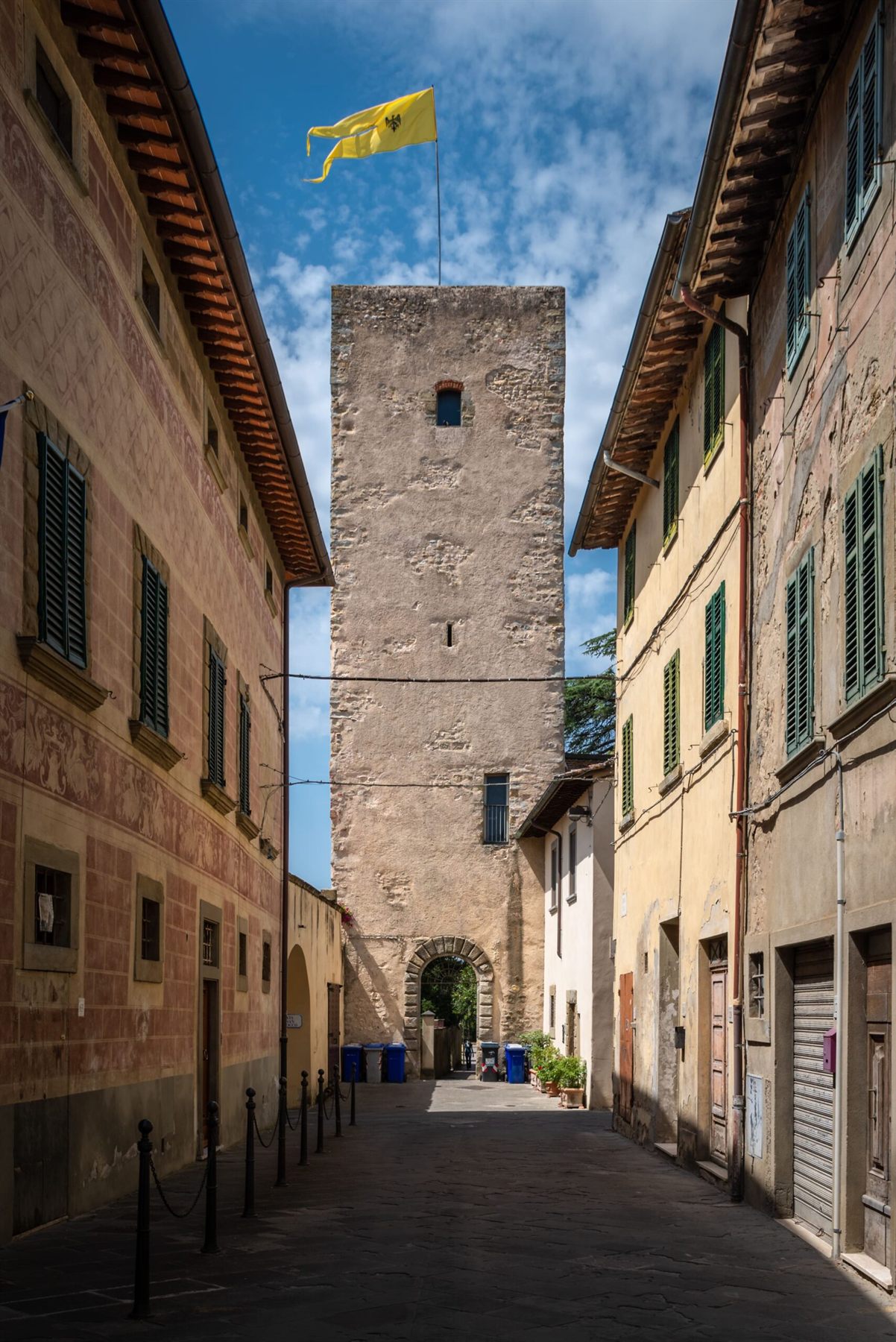
On the north side stands the Porta del Ghianderino, which locals in Laterina also call Porta Fredda or la Ghiacciaia. It's a tower from the late thirteenth century, and it still bears, carved in stone, the emblem of the Castello di Laterina. Among the village's architectural features, the sources consulted point to it as the most original, the least altered over the centuries. Right beside this tower, on Via Porta Fredda, stands the apartment La Torretta, which takes part of its name from it: staying there means having this gate as a neighbour.
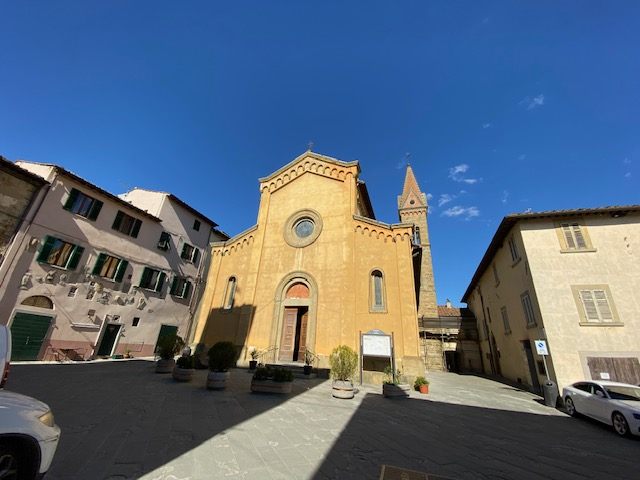
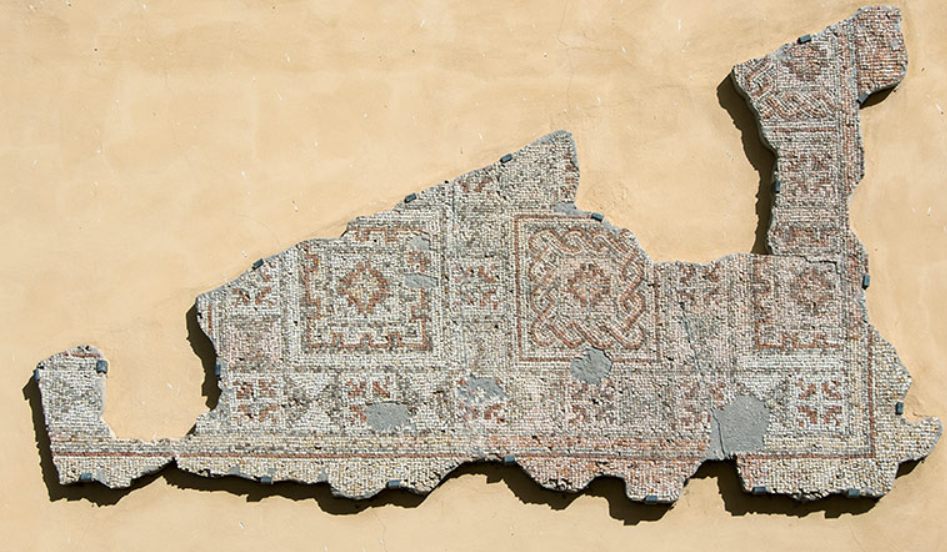
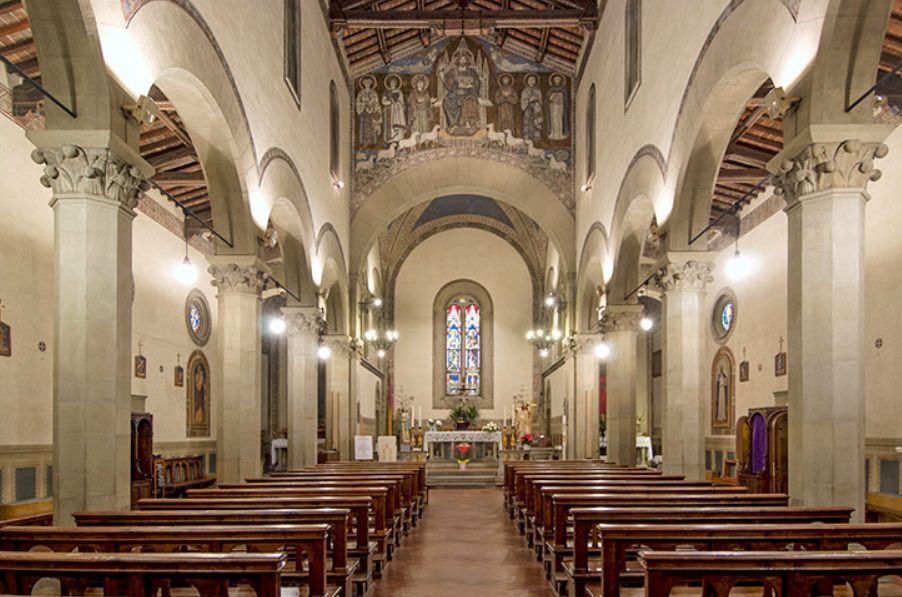
The square opens in front of the church of Santi Ippolito e Cassiano, with the Palazzo Podestarile facing it from one side, once the seat of the Podestà who administered the castle on behalf of the Florentine Republic. The façade carries more than twenty stone coats of arms, along with a few in polychrome glazed terracotta: governments succeeding one another over the centuries, embedded in the wall. On the façade, a stone sundial has marked the time for centuries. Beside the church, you can admire mosaics from the Roman imperial age, brought from a villa in the Le Pievi area.
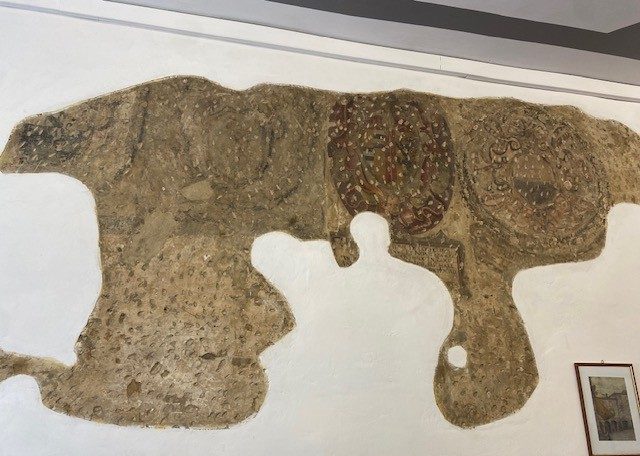
Inside the Palazzo Podestarile, on the floor where guests now stay in the Michelangelo apartment, is the Podestà's former reception hall. Fragments of a Renaissance fresco cycle survive on its walls: coats of arms painted in red and ochre, and the remains of an inscription of which only a few isolated letters can still be read. The surface still bears the marks of dense chisel work, struck centuries ago to help a new layer of plaster adhere, when the fresco was deliberately covered and forgotten, for generations, beneath a white wall. It was brought back to light only in recent times, and the restoration added nothing: no painted reconstruction, no imagined completion, only what time allowed to survive. It's the same story as the castle that houses it, on a smaller scale: something hidden, then given back to whoever looks. Laterina, as a whole, is a bit like that: a genuine village twenty minutes from Arezzo that most travellers don't know exists until they find it.
Among the many coats of arms set into the Palazzo Podestarile's façade, none carries the name that makes Laterina interesting to art historians, but the name is recorded elsewhere all the same. In 1457 Leonardo Buonarroti, Michelangelo's paternal grandfather, served as Podestà of Laterina: this is confirmed by the Buonarroti family tree published in 1875 by Aurelio Gotti in his Life of Michelangelo Buonarroti, compiled from documents in the family's own archive. Leonardo died in 1459, sixteen years before the birth of the grandson who would go on to carve the David: the connection to this place isn't a childhood anecdote, but a verifiable genealogical fact: a name recorded in the town's registers, a term of governance exercised in these very rooms.
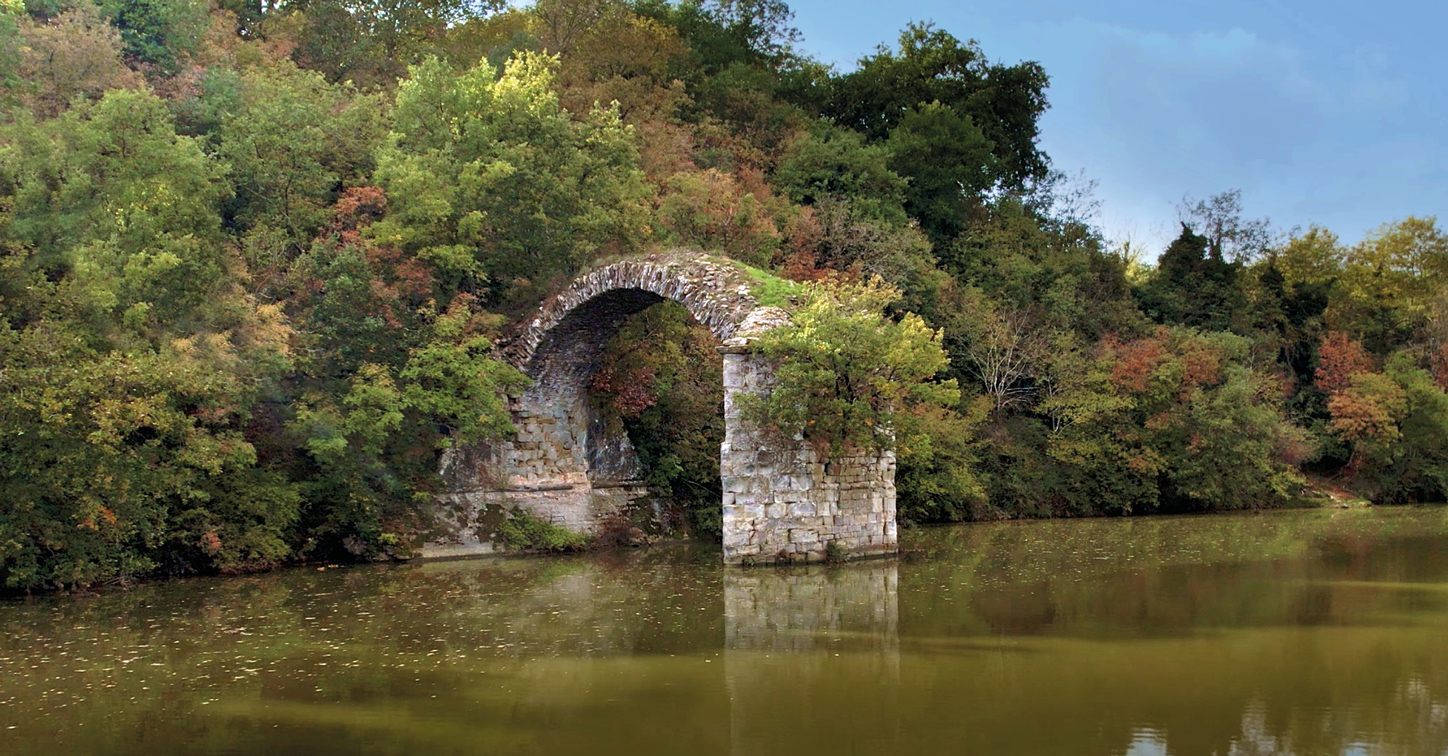
Il Podestà — Discover →At the opposite end of the village from Porta Fredda stands the Torre Guinigi: fourteenth-century, but more altered over the centuries. Beneath the tower, a gate leads to a small public park that was once the garden of the noble Guinigi family, who in the past owned estates in Laterina. Downhill from the village lie the remains of the Laterina refugee centre, built in 1941 as a prisoner-of-war camp and active from 1948 to 1963 as a refugee camp, where some nine thousand people found shelter, most of them Julian-Dalmatian exiles who had left the territories ceded to Yugoslavia under the 1947 Treaty of Paris. Not far from the castle flows the Arno River, and here the history gets more uncertain, and more intriguing: research by the cultural association La Rocca identifies the Ponte Romito, a stone arch now in ruins on the river, as the bridge depicted in Leonardo's Mona Lisa. The hypothesis sits alongside the more established one involving the nearby Ponte a Buriano, long associated with the same identification. Neither hypothesis is settled fact: they're proposed readings, not certainties, and both bridges are worth seeing with that in mind.
Laterina hasn't stayed frozen in the Middle Ages. Every year, on the last weekend of July, the village turns out in costume for its medieval reenactment, with processions and chivalric contests through the castle's streets. The rest of the year moves slowly, like a world running parallel to the frenzy of contemporary life that surrounds us and sometimes swallows us whole. Laterina is a place to rediscover the beauty of small things, no less genuine for being small.
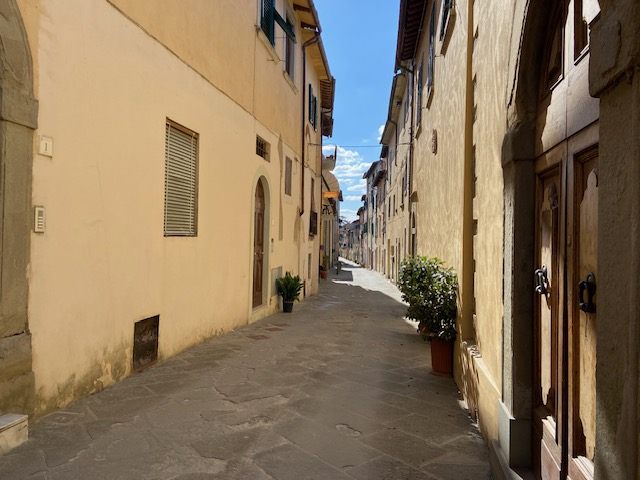
We live here, and we manage four apartments within these same walls. If this page has made you more curious than you expected, the apartments are the most direct way to stay a few nights instead of just reading about it.
Lo Sdrucciolo — Discover →