Palazzo Podestarile · Castello di Laterina
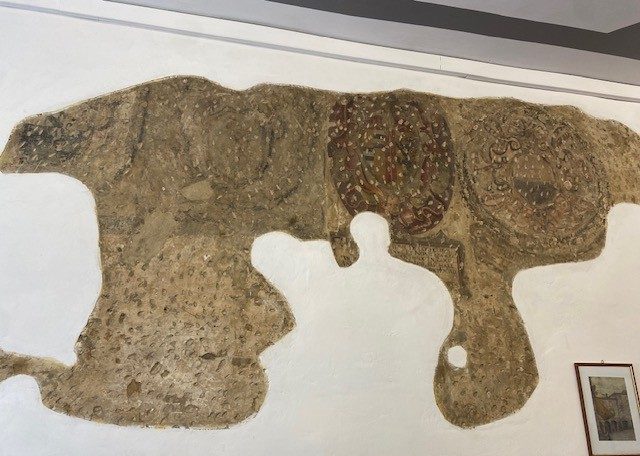
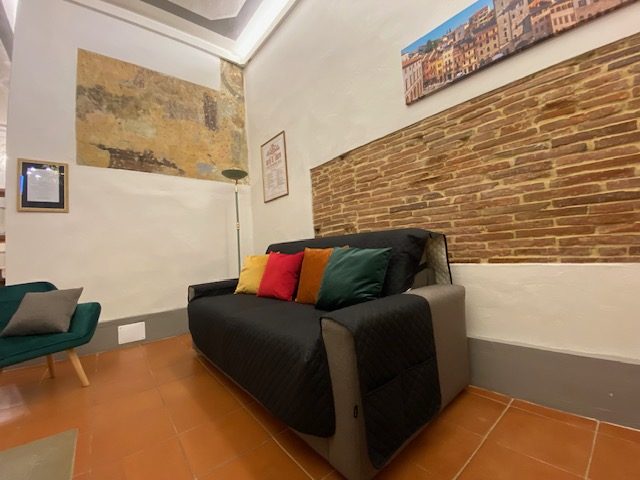
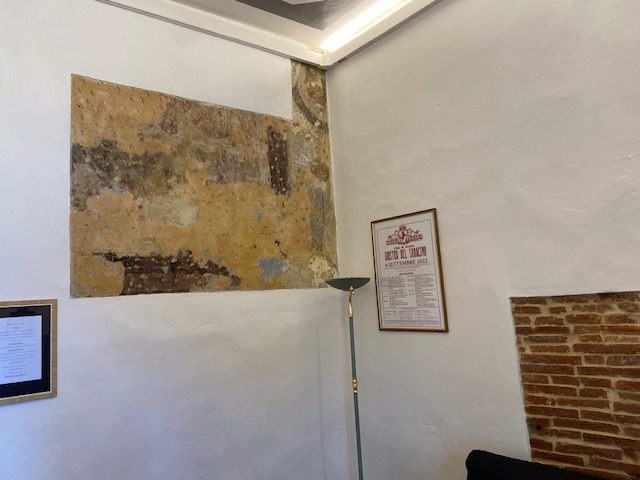
In the Podestà's former reception hall, with Renaissance frescoes on the walls.
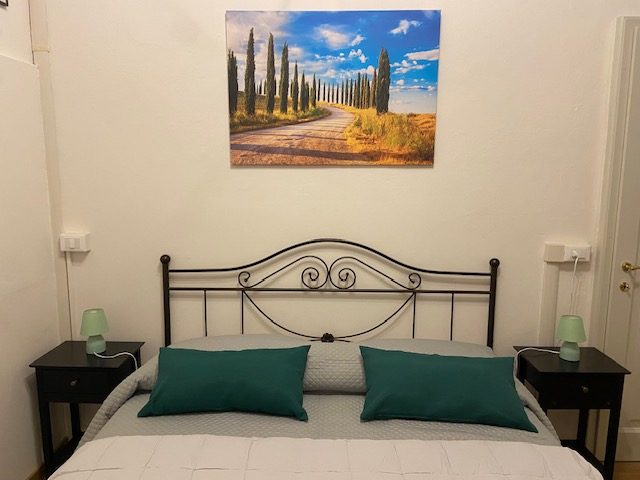
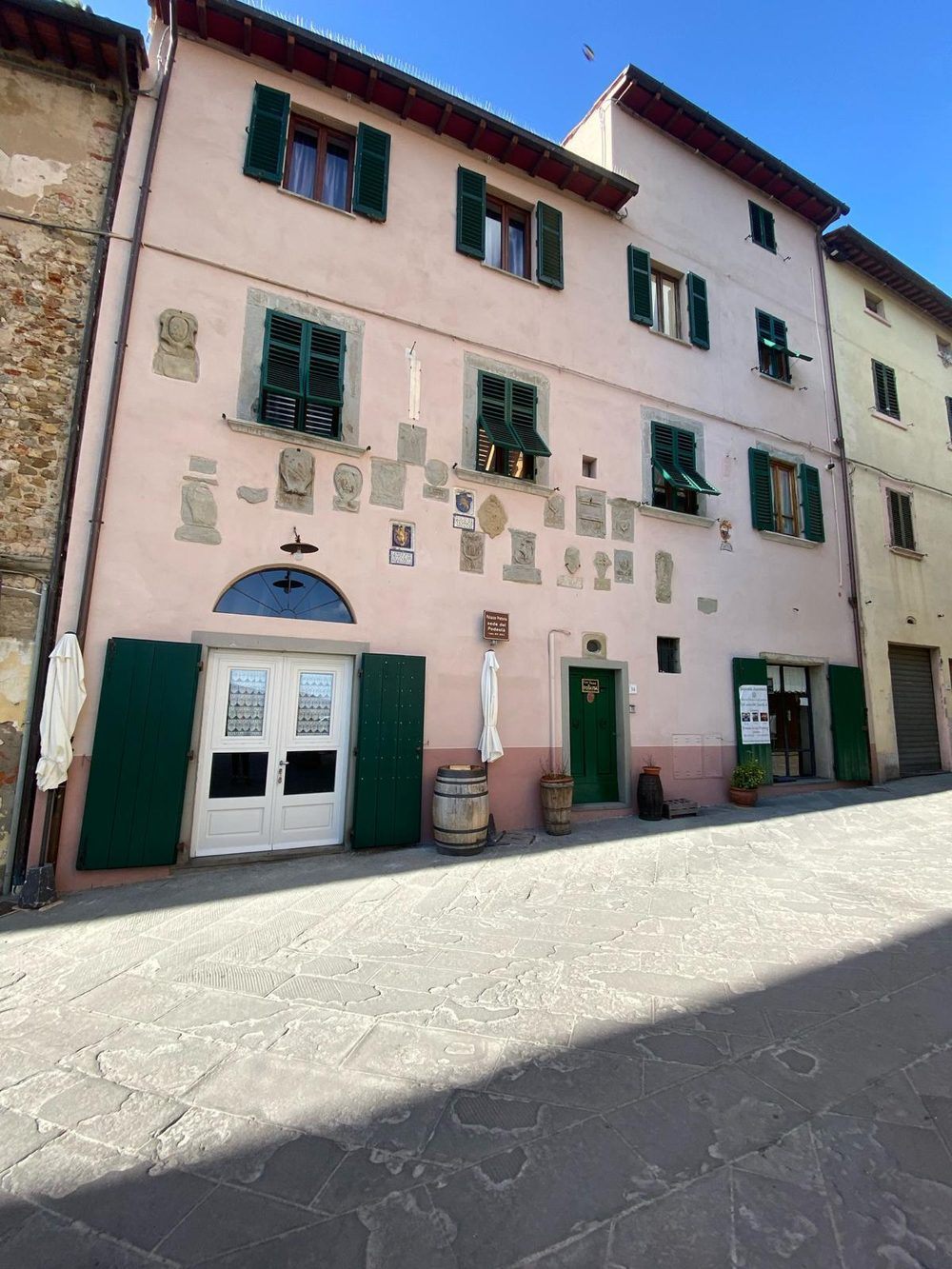
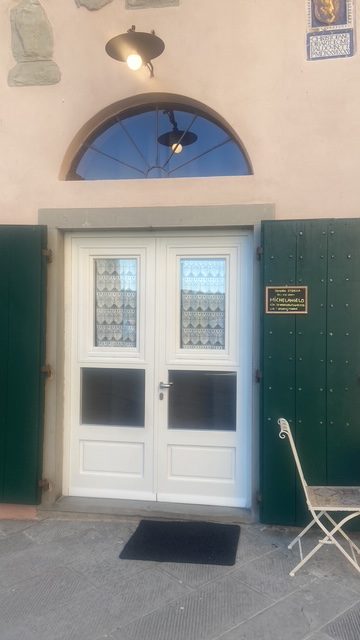
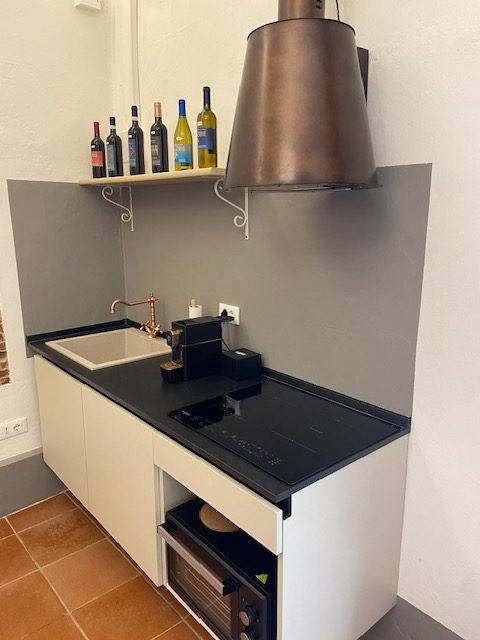
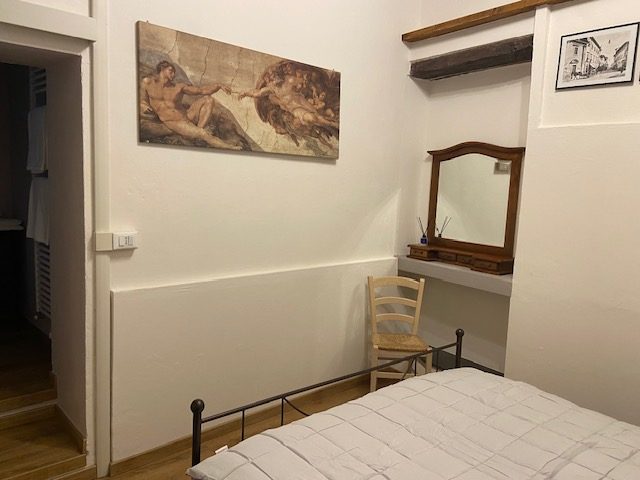
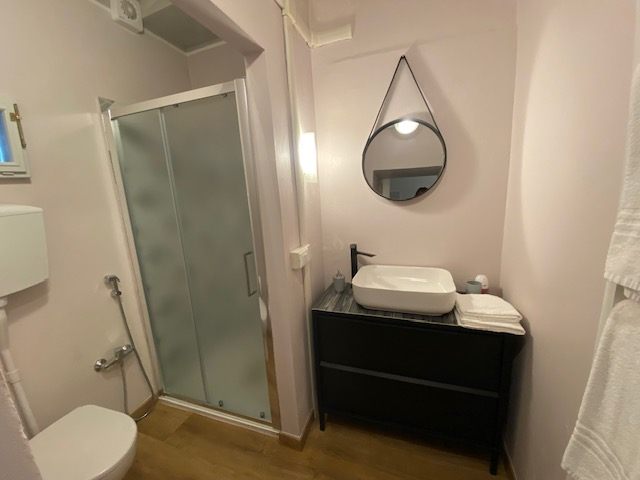
The Michelangelo apartment takes its name from a documented fact, not a suggestion. In 1457 Leonardo Buonarroti, Michelangelo's paternal grandfather, served as Podestà of Laterina: this is confirmed by the Buonarroti family tree published in 1875 by Aurelio Gotti in his Life of Michelangelo Buonarroti, compiled from documents held in the family's own archive. Leonardo died in 1459, sixteen years before the birth of the grandson who would go on to carve the David and paint the ceiling of the Sistine Chapel: the connection to this place is therefore not a childhood anecdote, but something more solid, a name recorded in the registers of the Comune and a term of governance exercised in this very palace, in the room that is today your living room. The family, known for three centuries as Simoni before permanently adopting the surname Buonarroti, had already given the city of Florence councillors, priors, and more than one minor official sent to govern the small towns of its contado: Leonardo was one of them, dispatched to Laterina as reputable Florentine citizens were then sent to administer justice and civic life in the castles subject to the Republic. The apartment occupies the Podestà's former reception hall, the room where for centuries whoever governed the castle received envoys, presided over hearings, and administered justice to the town's inhabitants. Fragments of a fresco cycle dating to the full Renaissance still survive on its walls: heraldic coats of arms painted in red and ochre within scrolling foliate frames, and the remains of a painted inscription of which only a few isolated letters can now be read. The surface bears the marks of a longer history than it reveals at first glance: a dense pattern of chisel marks covers much of the painting, struck centuries ago to help a new layer of plaster adhere, when the fresco was deliberately covered and, for generations, forgotten beneath a white wall. It was brought back to light only in recent times, and conserved with the ragged edge of what survives left visible: no painted reconstruction, no imagined completion, only what time allowed to pass through. To sleep in this apartment is to share the room with that fragment, not beside it but within the very hall where it was painted nearly six hundred years ago. The rest of the apartment does not compete with the fresco: it deliberately leaves it centre stage. The living room retains the ceiling height of the palace's grand halls; an exposed brick wall marks the point where the older masonry meets a more recent addition, and a sofa converts in the evening into a second bed for those travelling as four. The apartment also offers a fully equipped kitchenette. The double bedroom occupies a more secluded space, with a wrought-iron bed and an antique mirror above a small chest of drawers, while the private bathroom, with walk-in shower and vessel sink, is entirely contemporary, designed without compromise for the comfort of today's guest. This is a balance the apartment neither hides nor pretends to resolve: on one side a fifteenth-century fresco and the walls of a palace that has witnessed six centuries of the castle's history, on the other a comfortable bed, a modern shower, an internet connection that works when needed. Light enters mainly through the living room window, which faces the square and follows the rhythm of the village's day more than that of a room designed for a passing guest: footsteps on the paving stones in the morning, a quieter hush by late afternoon, and it is in those hours that the room, with the fresco caught in low light, best reveals its age. This is not a museum you are permitted to sleep in, nor an anonymous apartment with an important name attached for attention: it is a place that continues to be lived in, as it always has been, with the comforts anyone expects from a home today. This is an apartment for those with sensibility: for those seeking the most genuine Tuscany without giving up comfort. The palace housing the apartment faces the main square of the Castello di Laterina, the same square on whose façade more than twenty stone coats of arms and several glazed terracotta ones are set into the wall, silent testimony to the powers that governed the town in succession over the centuries. It is a small story inside a larger one, and worth telling with precision rather than embellishment: that precision, in the end, is what sets this place apart from anything the word "historic" is usually used to describe.
Details
Corso Italia 34 · 52019 Laterina (AR)
CIN IT051042B4F3GMBYO2 · CIR 051042LTI0006